Kandy Esala Perahera: A Guide to Sri Lanka's Grandest Festival
Experience the magic of the Kandy Esala Perahera, Sri Lanka's most sacred festival. Discover dazzling processions, ancient traditions, and cultural wonders.
Introduction
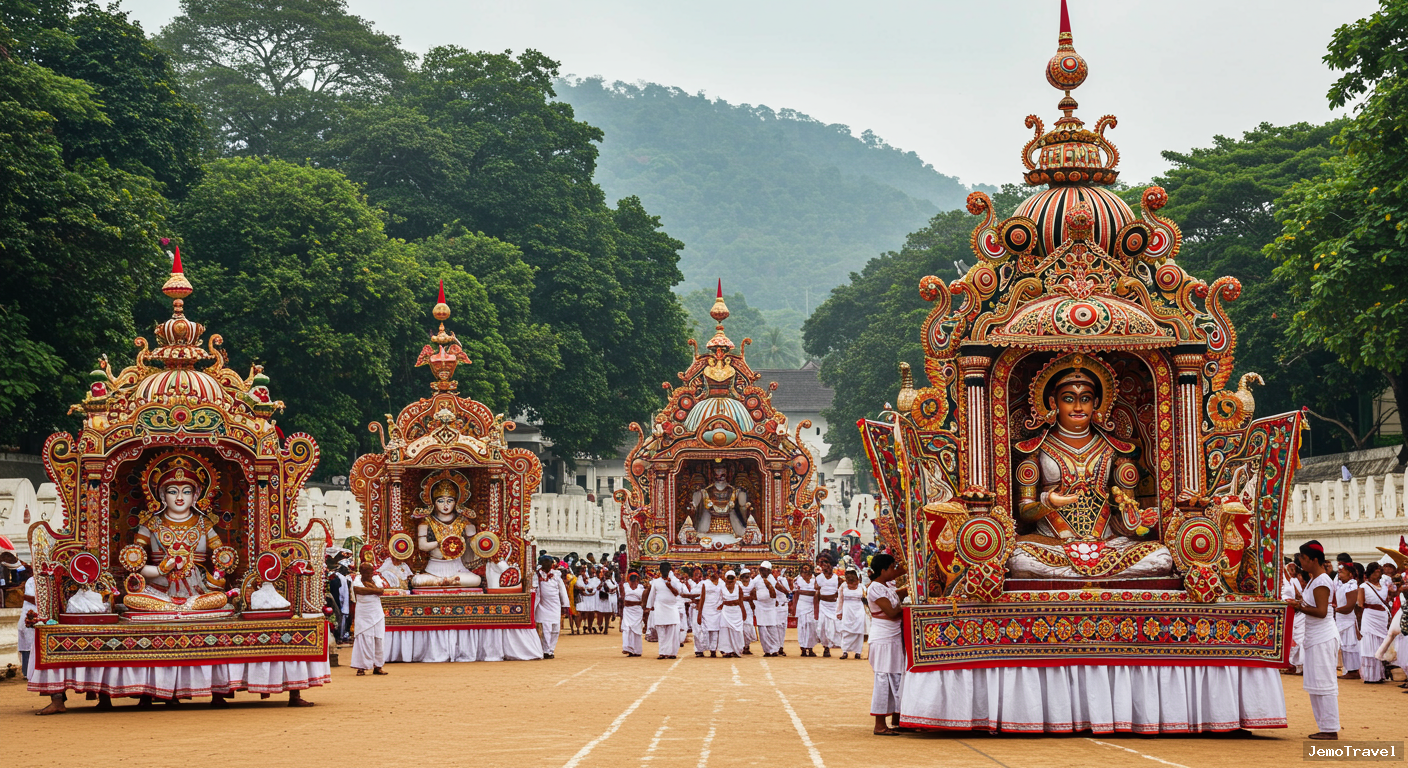
Each year, the ancient hill capital of Kandy transforms into a breathtaking spectacle of light, sound, and faith for the Kandy Esala Perahera. Heralded as one of Asia’s most magnificent cultural festivals, this grand procession is a vibrant, living tapestry of Sri Lankan heritage that has captivated audiences for centuries. For ten spectacular nights, the city streets come alive with the crack of whips, the rhythmic beat of hundreds of drummers, and the graceful movements of traditional dancers. At the heart of it all are the majestic elephants, adorned in lavishly embroidered costumes, parading under the moonlight. The Perahera is far more than a parade; it is a sacred ceremony held to honour the country's most revered Buddhist relic—the Sacred Tooth of the Buddha—and to seek blessings from the guardian deities of the island. It’s an unmissable, soul-stirring experience that showcases the very essence of Sri Lanka’s deep-rooted traditions and spiritual devotion.
History & Background
The Kandy Esala Perahera boasts a rich history that intertwines ancient rituals with profound religious significance. Its origins are a fusion of two separate yet powerful traditions. The first is the Esala Perahera, a ritual dating back to the 3rd century BC, which was held to beseech the gods for adequate rainfall to cultivate the crops. The second, and now more prominent tradition, is the Dalada Perahera, which began after the Sacred Tooth Relic of the Buddha was brought to Sri Lanka from India in the 4th century AD by Princess Hemamala and Prince Dantha. King Kirthi Sri Meghavanna decreed that the relic should be paraded annually for the public to venerate, establishing a tradition that has endured for over 1,700 years.
When the capital shifted to Kandy in the 16th century, the Sacred Tooth Relic—a powerful symbol of sovereignty—was enshrined in the newly built Temple of the Tooth (Sri Dalada Maligawa). However, the modern form of the Perahera was established by the Kandyan King Kirti Sri Rajasinha in the mid-18th century. He decided to merge the Hindu Devale processions with the Buddhist Dalada procession, allowing ordinary people to see the casket and pay homage. This unified pageant involves processions from the four main 'Devales' (shrines) dedicated to the guardian gods Natha, Vishnu, Kataragama, and the goddess Pattini, which precede the main Maligawa procession.
This incredible cultural heritage and the temple that houses the relic are so significant that the city of Kandy was declared a UNESCO World Heritage Site in 1988. The Perahera is not merely a historical reenactment; it is the vibrant continuation of a sacred vow, a national treasure that proudly displays the island's devotion, artistry, and resilience through the ages.
What to See and Do
The Kandy Esala Perahera is an overwhelming sensory feast, with each element of the procession holding deep symbolic meaning. The spectacle begins with the sharp crack of whips from the Kasa Karayo, who symbolically clear the path of any malevolent spirits. They are followed by flag bearers carrying the standards of the different provinces of the Kandyan Kingdom, and the official Peramunerala who rides the first elephant, carrying the ancient register of the temple lands.
As the procession unfolds, you will be mesmerized by the sheer diversity of performers. Hundreds of traditional dancers, adorned in elaborate costumes, fill the streets with energy. Look for the famous Kandyan dancers (Ves), with their intricate silver headgear, performing acrobatic feats. You will also see Pantheru dancers with their tambourine-like instruments and Udekki dancers playing their small, hourglass-shaped drums. The powerful, resonating sound of the hewisi drummers, a large ensemble of traditional percussionists, provides a thunderous heartbeat to the entire event, creating an atmosphere of reverence and excitement.
The undeniable stars of the Perahera are the elephants. Dozens of these gentle giants, sourced from temples across Sri Lanka, are dressed in stunningly ornate costumes embellished with lights and embroidery. The climax of the evening is the arrival of the magnificent Maligawa Tusker. This majestic elephant has the sacred duty of carrying the ransivige, a golden casket that holds a replica of the Sacred Tooth Relic. The real relic is never taken out of the temple. The reverence shown to this tusker by both performers and spectators is a profoundly moving sight.
To truly appreciate the Perahera, securing a good viewing spot is essential. The parade route through Kandy's streets gets incredibly crowded. JEMO TRIP & TOUR can arrange for premium reserved seating in balconies and hotels along the route, ensuring a comfortable and unobstructed view. The festival is divided into two parts: the first five nights are the quieter Kumbal Perahera, while the final five, more elaborate nights are the Randoli Perahera, culminating in the grandest procession on the final night. During the day, a visit to the Sri Dalada Maligawa itself provides crucial context to the evening's festivities.
Best Time to Visit
The Kandy Esala Perahera is held annually for ten consecutive nights, typically in the month of July or August. The exact dates are determined by the Esala full moon Poya day, a significant date in the Buddhist lunar calendar, and therefore change each year. It is absolutely essential for travelers to verify the official Perahera dates for the year they intend to visit. Planning your trip around the final five nights, the Randoli Perahera, is highly recommended as the processions become progressively more spectacular, culminating in the grand finale on the last night.
This period falls within Sri Lanka's inter-monsoonal season. In Kandy, you can expect warm and humid days with average temperatures hovering around 28-30°C (82-86°F). While daytime is often sunny, evening rain showers are quite common. However, the rain never stops the Perahera; the procession continues with unwavering spirit. It is wise to bring a raincoat or umbrella. Due to the festival's immense popularity, accommodation in Kandy gets booked out months in advance, and prices surge. We strongly advise booking your flights, hotels, and Perahera viewing seats at least six to nine months in advance to avoid disappointment. JEMO TRIP & TOUR can expertly handle all these arrangements for a seamless experience.
How to Get There
Kandy, the cultural heart of Sri Lanka, is centrally located and accessible from the country's main international gateway, Bandaranaike International Airport (CMB) near Colombo. The city is approximately 115 kilometers east of the airport, and the journey offers several scenic and practical transportation options.
The most comfortable and convenient way to travel is by private vehicle. A journey by car or van, which JEMO TRIP & TOUR can arrange for you, typically takes around 3 to 4 hours, utilizing the smooth Colombo-Kandy highway and the Central Expressway. This option provides the flexibility to stop at interesting sights along the way.
For a truly iconic Sri Lankan experience, the train journey from Colombo Fort to Kandy is world-renowned. This scenic ride, lasting about 3 to 3.5 hours, winds through lush green hills, tea plantations, and charming villages. Observation class or first-class tickets offer the best views and comfort, but they sell out weeks, or even months, in advance, especially during the Perahera season. For the budget-conscious traveler, public buses offer frequent and inexpensive services from Colombo, though they can be crowded and the journey may take longer depending on traffic.
Travel Tips & Recommendations
To make the most of your Perahera experience, advance planning is key. Book all aspects of your trip—flights, accommodation, and especially your Perahera viewing seats—at least six months beforehand. When visiting the Temple of the Tooth or other religious sites, remember to dress modestly by covering your shoulders and knees, and be prepared to remove your shoes and hat before entering. Given the crowds and the warm evenings, stay hydrated, but note that access to public restrooms along the parade route can be very limited.
On the day of the procession, arrive at your viewing spot well in advance, as streets are closed to traffic hours before the start. Pack a light raincoat and be patient, as the full procession can last for over three hours. Most importantly, approach the event with respect. The Kandy Esala Perahera is a sacred religious pageant, not a street party. Engaging a local guide, which JEMO TRIP & TOUR can facilitate, will immeasurably enhance your understanding of the intricate rituals, symbolism, and history unfolding before your eyes.
Conclusion
The Kandy Esala Perahera is more than just a festival; it is a profound journey into the heart of Sri Lankan culture, a once-in-a-lifetime experience that resonates with history, devotion, and spectacular beauty. Witnessing this grand pageant is to witness a tradition that has thrived for millennia.
Don't just dream about it. Contact JEMO TRIP & TOUR today, and let our experts craft your bespoke Sri Lankan adventure around this magnificent festival. We handle all the details, so you can immerse yourself in the magic and create memories that will last a lifetime.
Related Articles
Is Sri Lanka Safe for Tourists? A 2025 Guide to a Secure Trip
Discover the truth about Sri Lanka's safety for tourists. Our 2025 guide covers everything from hist...
Read More
Mirissa Beach Guide: Sri Lanka's Unforgettable Coastal Paradise
Discover Mirissa, Sri Lanka's jewel of the south coast. Our guide covers whale watching, Coconut Tre...
Read More
Belihul Oya: Sri Lanka's Hidden Eco-Adventure Paradise
Discover Belihul Oya, a breathtaking destination where Sri Lanka's wet and dry zones meet. Explore l...
Read More