Dambulla Golden Temple: A Guide to Sri Lanka's Sacred Caves
Discover the Dambulla Golden Temple, a UNESCO World Heritage site in Sri Lanka. Explore ancient caves, magnificent Buddha statues, and vibrant murals. Plan your visit with JEMO TRIP & TOUR.
Introduction
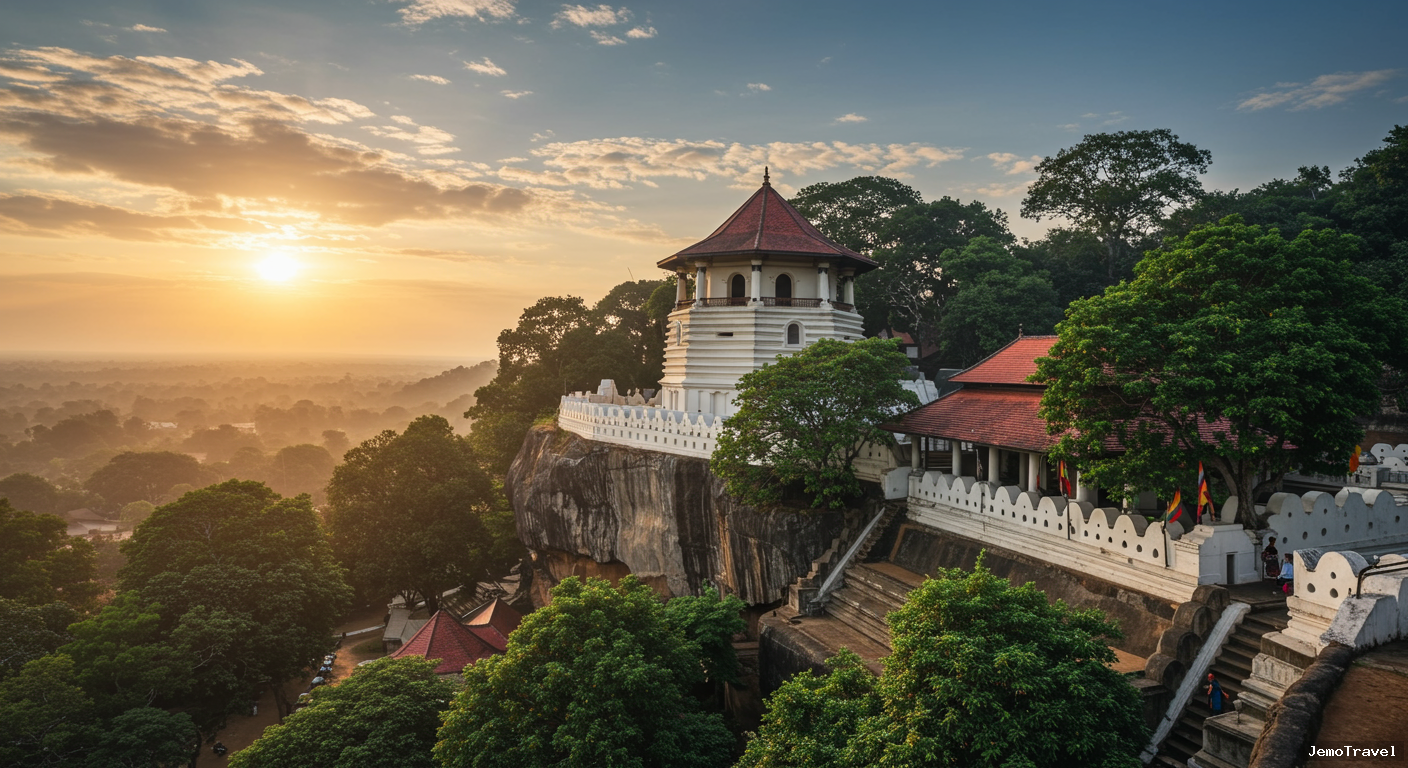
Nestled in the heart of Sri Lanka's Cultural Triangle, the Dambulla Golden Temple, a UNESCO World Heritage site since 1991, stands as a breathtaking testament to millennia of faith and artistry. This is not just a single temple but a magnificent cave complex, the largest and best-preserved in the country, carved into a colossal 160-meter-high rock. As you approach, the gleaming modern Golden Buddha statue welcomes you, but the true marvel lies above. Ascend the stone steps to discover five sacred caves, a sanctuary that has sheltered monks and kings for over 2,200 years. Inside, a world of profound serenity unfolds, revealing over 150 exquisite statues of Buddha and an astonishing 2,100 square meters of intricate murals that vibrantly narrate tales of Buddhist lore and Sri Lankan history, making it an unmissable spiritual and cultural pilgrimage.
History & Background
The history of the Dambulla rock extends deep into Sri Lanka’s prehistoric past, with evidence suggesting the caves were inhabited long before the arrival of Buddhism. However, the temple’s formal origin story is intrinsically linked to King Valagamba (Vattagamani Abhaya) in the 1st century BC. After being driven from his capital, Anuradhapura, by South Indian invaders, the king found refuge in these caves for 14 years. Protected by the resident monks, he vowed to build a magnificent temple on the site upon reclaiming his throne. True to his word, after his victory, he transformed the caves into a spectacular monastic complex, initiating the rich legacy we see today.
Over the subsequent centuries, the temple was expanded and embellished by various Sri Lankan rulers. In the 12th century, King Nissanka Malla gilded many of the cave interiors and added about 70 Buddha statues, leading to its name 'Rangiri Dambulla' or 'Golden Rock Dambulla'. The Kingdom of Kandy in the 18th century was also responsible for significant repainting and restoration of the murals, adding their distinct artistic style. This continuous royal patronage has ensured the temple's preservation and its status as a living place of worship.
This unbroken chain of history and devotion culminated in its most significant modern recognition. Recognizing its immense cultural and historical value as one of the world's most important Buddhist sites, UNESCO declared the Rangiri Dambulla Cave Temple a World Heritage Site in 1991, safeguarding its ancient art and spiritual atmosphere for future generations to experience.
What to See and Do
Your journey at Dambulla begins at the base of the rock, where the gigantic, 30-meter-high golden Buddha statue sits in the dhyana mudra (meditation pose). This modern addition houses the Dambulla Museum, offering further context on Buddhist art and history. From here, a moderately strenuous climb of around 15-20 minutes up a series of stone steps brings you to the ancient cave complex. Remember to purchase your ticket at the base before you ascend, as they are not sold at the top.
The true treasures are found within the five main caves. The first, Devaraja Viharaya (Cave of the Divine King), is dominated by a magnificent 14-meter-long reclining Buddha, carved from the rock itself, depicting his final moments. At his feet is his loyal disciple, Ananda, and the cave also contains a statue of the god Vishnu, believed to have blessed the temple's creation.
The second and largest cave, Maharaja Viharaya (Cave of the Great Kings), is the most spectacular. It houses 56 statues, including a standing Buddha under a makara thorana (dragon arch), and is adorned with vibrant murals. Look for the statues of the temple's patrons, King Valagamba and King Nissanka Malla. A unique vessel inside this cave miraculously collects water that drips from the ceiling—even during droughts—which is used for sacred rituals.
The third cave, Maha Alut Viharaya (Great New Monastery), is filled with beautiful ceiling and wall paintings in the Kandy an style, added in the 18th century by King Kirti Sri Rajasinha. It contains a stunning reclining Buddha and over 50 other statues. The final two caves, Paccima Viharaya and Devana Alut Viharaya, are smaller but contain more serene statues, including a reclining Buddha in the latter, offering a quieter space for reflection away from the main crowds.
Best Time to Visit
Planning your visit to Dambulla around the weather will significantly enhance your experience. The best time to explore the Golden Temple is during the primary dry season, which typically runs from January to April. During these months, you can expect clear skies, minimal rainfall, and plenty of sunshine, making the climb up the rock much more pleasant and rewarding with stunning panoramic views of the surrounding plains, including the distant Sigiriya Rock. Temperatures in the Cultural Triangle average a warm 28-32°C (82-90°F).
Another favourable window is from July to September, a secondary dry period between the two monsoon seasons, offering similarly pleasant conditions. We recommend avoiding the main monsoon months of October to December, as heavy rains can make the rock steps slippery and obscure the vistas. To avoid the intense midday heat and the largest crowds, plan your ascent for the early morning, right after opening at 7:00 AM, or in the late afternoon after 3:00 PM. This timing ensures a more comfortable climb and a more serene experience inside the caves.
How to Get There
Dambulla's strategic location in Sri Lanka's Cultural Triangle makes it easily accessible from major tourist hubs. From the capital city of Colombo, the journey is approximately 150 kilometers and can be covered in about 4-5 hours by private vehicle, which is the most comfortable option that JEMO TRIP & TOUR can arrange for you. Alternatively, frequent public and private buses run from Colombo's main bus terminal, offering a more economical travel method.
If you are travelling from the hill capital of Kandy, the trip is much shorter, around 72 kilometers, taking 2-2.5 hours by car or van. Buses from Kandy are also a popular and frequent choice. For those staying in nearby Sigiriya or Habarana, a short 20-30 minute journey by car or local tuk-tuk is all it takes. Dambulla is a cornerstone of any Cultural Triangle itinerary, often combined with a visit to the iconic Sigiriya Rock Fortress on the same day for a full day of historical exploration.
Travel Tips & Recommendations
To ensure a smooth and respectful visit, keep these essential tips in mind. A strict dress code is enforced at this sacred site: ensure your shoulders and knees are covered. We recommend carrying a sarong or scarf for convenience. You must remove your shoes and any headwear before entering the sacred cave area; leaving them at the designated counter for a small fee is customary. Consider bringing a pair of socks, as the stone ground can get very hot under the sun.
Remember to purchase your entrance ticket at the ticket office at the bottom of the hill before you begin your climb, as they are not available at the top. Stay hydrated by bringing a bottle of water for the ascent. When taking photographs, be mindful not to use a flash, as it can damage the ancient murals, and always show respect by never turning your back to a Buddha statue for a photo.
Conclusion
The Dambulla Golden Temple is more than just a tourist site; it is a profound journey into the heart of Sri Lanka's spiritual and artistic heritage. From its ancient murals to its serene statues, every corner tells a story of devotion spanning centuries. Ready to witness this UNESCO masterpiece for yourself? Contact JEMO TRIP & TOUR today to craft your personalized Sri Lankan adventure and let us guide you through the wonders of the Cultural Triangle.
Related Articles
Misty Hills to Golden Shores: Your Ultimate Sri Lanka Itinerary
Explore Sri Lanka's stunning contrast, from the misty tea plantations of Ella to the golden beaches...
Read More
Yala Safari: Sri Lanka's Ultimate Leopard & Wildlife Adventure
Discover the untamed wilderness of Yala National Park! Plan your ultimate Sri Lanka safari to see le...
Read More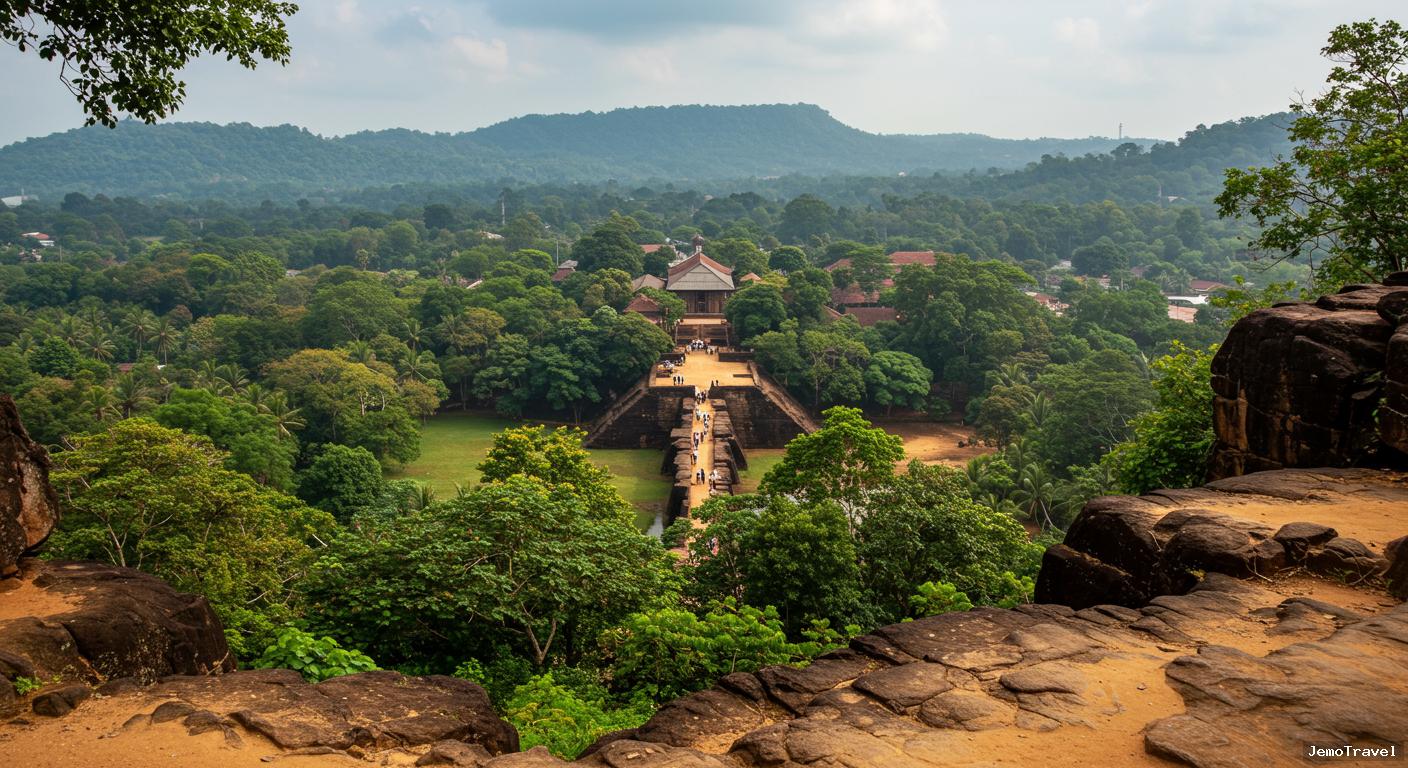
The Sri Lankan Head Waggle Explained: A Visitor's Guide
Unlock the secrets of Sri Lanka's most charming non-verbal cue. Our guide deciphers the famous head...
Read More